Table of Contents
- 1. What is açaí?
- 2. Is açaí similar to blueberries?
- 3. Why should I eat açaí?
- 4. Is açaí sweet?
- 5. How is açaí processed?
- 6. Is açaí sustainable?
- 7. Does açaí help with weight loss?
- 8. Does açaí help prevent premature ageing?
- 9. Can people with diabetes eat açaí?
- 10. Is açaí safe for all ages?
- 11. What are the benefits of açaí for people who exercise?
- 12. Why is açaí considered a superfood?
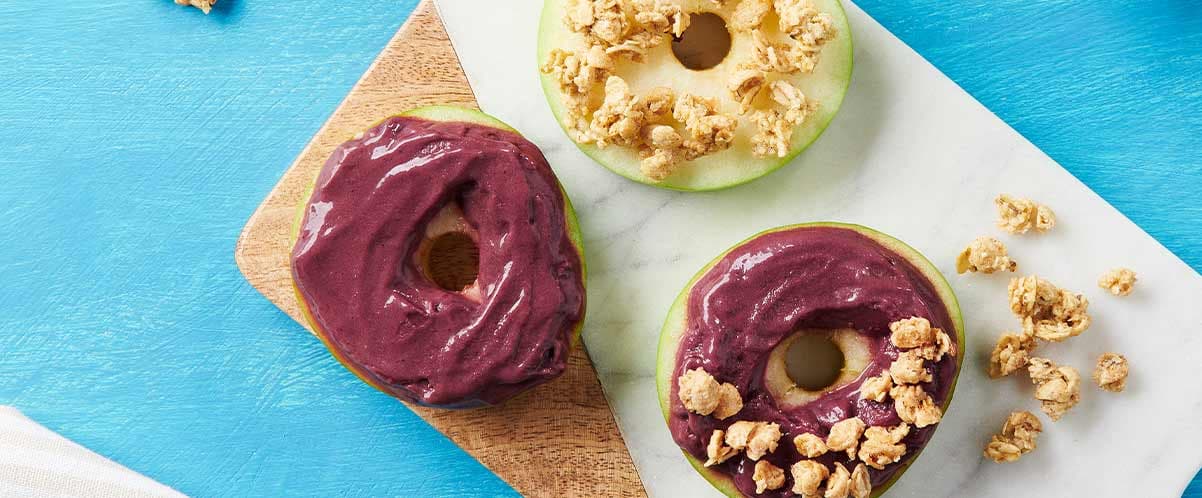
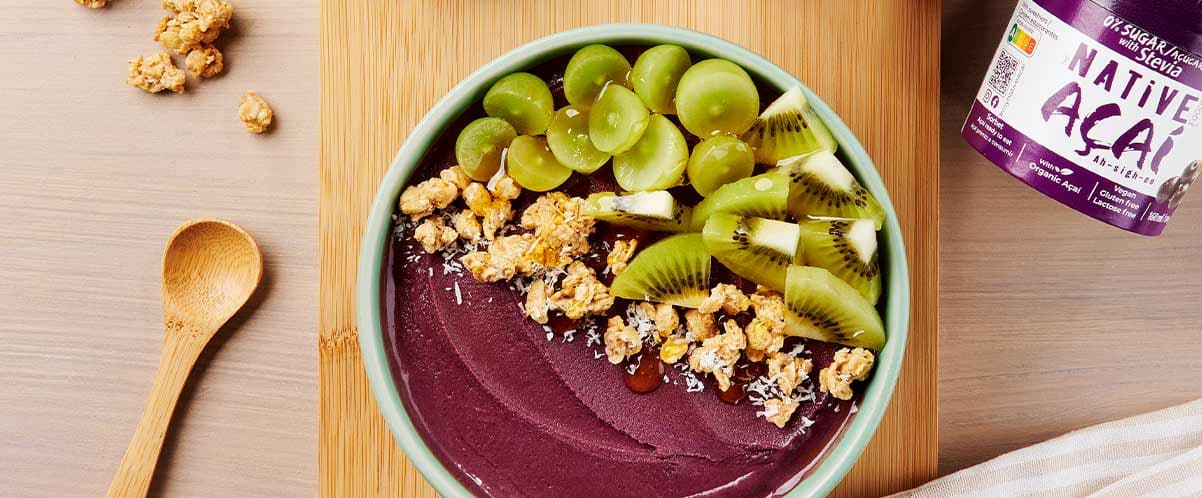
- 13. What are the different ways to eat açaí?
Descobre a tua receita perfeita com NATIVE Açaí
Responde a algumas perguntas rápidas e encontra a combinação ideal para o teu estilo.
With a flavour that's truly one of a kind, açaí is widely recognised not only for its taste but also for its nutritional properties and health benefits.
In recent years, demand for this exotic fruit has grown steadily. So what better time to talk about what açaí actually is, what makes it special, and how you can start incorporating it into your diet.
We've put together this article around the 13 most frequently asked questions about açaí. Read on and discover everything about this healthy, delicious fruit.
1. What is açaí?
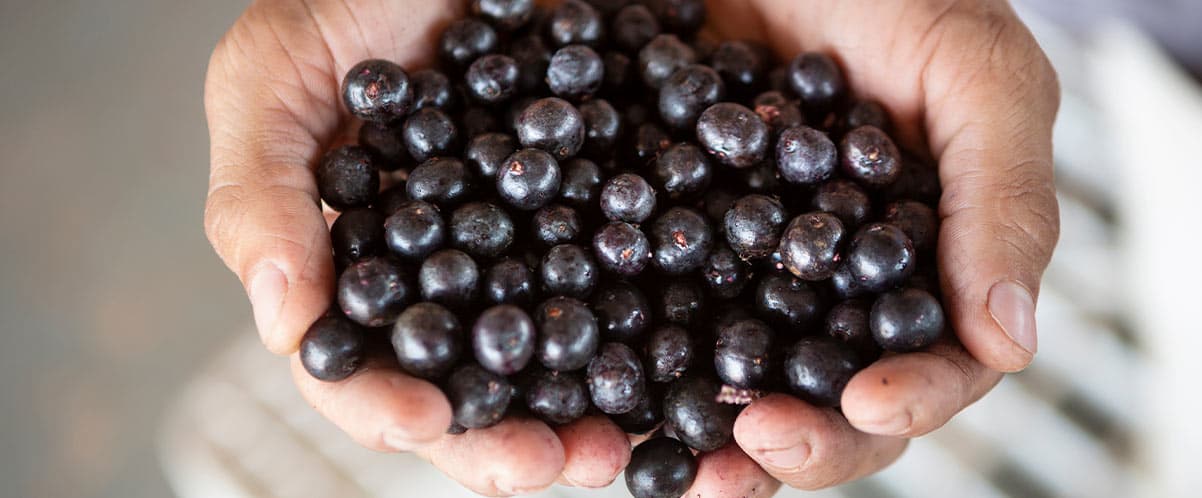
Açaí is a fruit native to the Amazon region: a small berry, deep purple or black in colour, with a highly distinctive flavour and an impressive nutritional profile.
Did you know that only around 5% of the fruit is edible? The seeds are used by local communities to make handicrafts, while the leaves are used to weave hammocks, hats, and even roof coverings.

2. Is açaí similar to blueberries?
Açaí and blueberries do share a few things in common. Both are considered superfoods, rich in vitamins, antioxidants, and fibre.
Despite their similar size and appearance, açaí contains up to 17 times more antioxidants than blueberries.

3. Why should I eat açaí?
Beyond its undeniable health benefits, what makes açaí so hard to resist is its unique flavour. Its creamy, refreshing flesh makes it a delicious choice for a meal or snack.
Açaí is also an incredibly versatile ingredient that can be enjoyed in many different ways, lending itself to all kinds of creative, flavourful combinations.
And when you eat açaí, there's something almost cultural about it: a small taste of the heritage, tradition, and history of the Amazonian people.
4. Is açaí sweet?
Açaí has a flavour that's genuinely hard to pin down. Many people describe it as a subtle combination of chocolate and red berries.
In its natural form, the fruit isn't particularly sweet but Native Açaí sorbet, made from organic açaí, has a pleasantly sweet flavour while still being a healthy choice. If you'd prefer something without added sugar, Native Açaí Zero Sugar is sweetened exclusively with stevia and retains all the nutritional goodness of the fruit.
5. How is açaí processed?
The production process for Native Açaí specifically involves five key steps:
1. Harvesting: The fruit is harvested between August and December, when it's fully ripe. Picking happens in the morning and moves quickly to avoid exposure to heat and sunlight.
2. Transport: Once harvested, the fruit is immediately taken to the factory to be cleaned and processed.
3. Cleaning: The fruit is hand-sorted and cleaned to remove any impurities, leaves, or insects.
4. Pulp extraction: The skin is removed using machines called pulpers. The extracted pulp can vary in density: thick, medium, or light.
5. Freezing: The pulp is packaged and frozen.

At Native Foods, we import frozen organic pulp from Brazil and transform it at our factory here in Portugal.
6. Is açaí sustainable?
As the value of açaí has grown, harvesting it has become one of the most important sources of income for people in the region. At the same time, this growing demand is actually helping to protect açaí palm trees from being cut down.
7. Does açaí help with weight loss?
The role açaí plays in weight loss isn't fully understood yet. What we do know is that it's a fruit rich in antioxidants, vitamins, and minerals, and it contains a good amount of fiber, which helps you feel fuller for longer.
Losing weight requires a balanced diet, regular physical activity, and an overall healthy lifestyle. In that context, açaí can be a great ally, but it works best as part of a varied, well-rounded diet. Working with a nutrition professional is always a worthwhile step in this journey.
8. Does açaí help prevent premature ageing?
Açaí is packed with essential nutrients and antioxidants that help protect the body from free radicals, which are one of the main contributors to premature ageing.
It also contains fatty acids — including omega-6 and omega-9 — which are important for skin health, helping to keep it hydrated, protected, and looking its best.
9. Can people with diabetes eat açaí?
Açaí is a healthy option for people with diabetes, as long as it's consumed in moderation as part of a balanced diet. Beyond its rich nutritional profile, açaí has a low glycaemic index, making it a suitable choice for blood sugar management.
If you have diabetes, we recommend trying Native Açaí Zero Sugar.
Native Açaí is also considered an inclusive food: it's free from gluten and lactose, making it suitable for people with coeliac disease, lactose intolerance, and those following a vegetarian diet.
10. Is açaí safe for all ages?
Açaí is a healthy and safe option for people of all ages, though, as with any food, it's best enjoyed as part of a varied and balanced diet. Even children can benefit from açaí. All it takes is a little creativity to come up with fun recipes that the little ones will love.

11. What are the benefits of açaí for people who exercise?
For those who are physically active, regular açaí consumption can support both performance and muscle recovery.
It's also a natural source of carbohydrates, which are essential for fuelling the body during exercise. And because açaí has a low glycaemic index, it releases sugar into the bloodstream gradually, helping to avoid energy spikes and keeping you going for longer.
12. Why is açaí considered a superfood?
Açaí earns its superfood status thanks to its exceptional nutritional composition and the wide range of health benefits it can offer. Adding it to your diet is a simple and effective way to support your overall health and wellbeing.
Native Açaí is also vegan, lactose-free, and free from artificial colourings and preservatives, making it an even more compelling choice.
13. What are the different ways to eat açaí?
Açaí can be enjoyed in several forms, but the most common are:
- Açaí powder: made by dehydrating and grinding the fruit's pulp, açaí powder can be used in a wide range of recipes, from smoothies to desserts.
- Açaí sorbet: a more versatile and flavourful option, like Native Açaí. Our sorbet is made from natural, organic açaí, which means all the fruit's properties and benefits are fully preserved.

Now that you know what açaí is, are you ready to start creating your own recipes? Head over to our suggestions for a little inspiration and discover just how good this ingredient can be. You'll want to keep it on hand all the time.
Açaí is more than a superfruit. It's part of a healthy lifestyle and a seriously delicious one at that.
Curious to try it or want to learn even more? Follow us on Instagram and Facebook, discover new ways to enjoy this extraordinary fruit, share your own recipes, and see what other açaí enthusiasts are creating.